Before you buy anything
- Ask your program what it requires. Many learn-to-play programs list the exact pieces and some lend gear for the first sessions.
- Try gear on together, in the order you will wear it. Pads need to overlap with no bare gaps.
- Fit beats features. A well-fitted basic pad protects better than an expensive one that slides around.
- For helmets, look for the safety certification your league requires, and replace any helmet that is cracked or has taken a hard hit.
Head-to-toe fit checks
Helmet
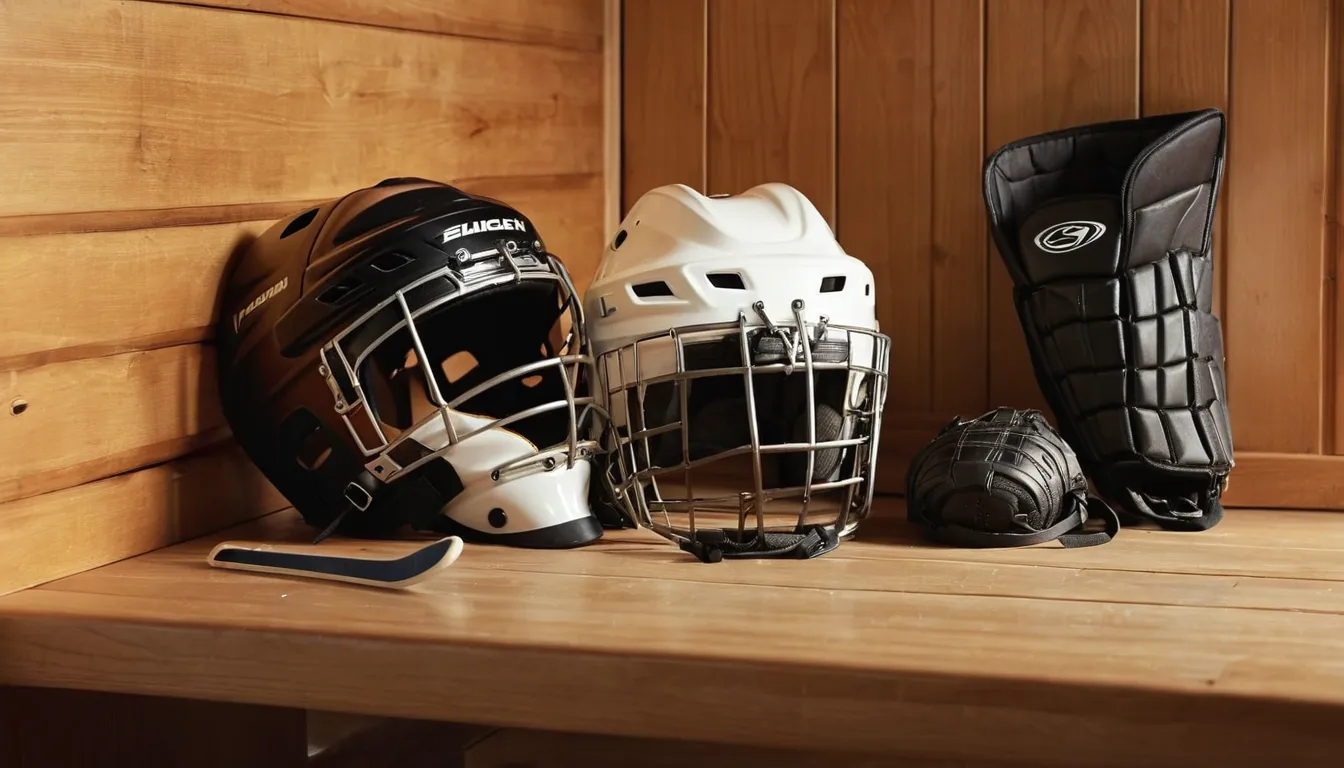
Snug with no rocking when you shake your head. The front sits about a finger width above your eyebrows. Use a full cage or shield; most beginner programs require one.
Neck guard
Covers the throat without choking. Required in many youth programs and a sensible add for adults.
Shoulder pads
The caps sit over the points of your shoulders and the chest plate covers the breastbone. You should be able to lift your arms overhead.
Elbow pads
Your elbow sits in the center of the cup. The top meets your shoulder pad and the bottom meets your glove cuff, with no bare gap.
Gloves
Fingertips reach near the ends without jamming. The cuff should meet the elbow pad and still let your wrist bend.
Pants or girdle
The top covers your lower ribs and kidneys, the bottom overlaps the top of the shin guards. Roller players often wear a lighter girdle with a shell.
Protective cup
A jock or jill with a cup. Fit should be close and comfortable. Every player wears one.
Shin guards
Your kneecap sits in the center of the knee cap. The bottom ends at the top of the skate boot, where the tongue starts.
Skates
Standing, your toes lightly touch the toe cap. Bend your knees and they pull back slightly. Your heel should not lift when you flex forward.
Mouth guard
Many leagues require one. Fitted guards stay in place better than loose ones.
More about skates
Skates matter more than any other piece. A good fit is snug all around, with your heel locked in place and no pressure points that hurt. Try them on with the socks you will skate in, lace them firmly through the middle, and stand in the hockey stance. If your heel lifts, they are too big or the wrong shape for your foot.
Skate sizes usually run smaller than shoe sizes, and the gap varies by maker. Have them measured by someone who fits skates, and expect to try several models. Many hockey skates can be heat-molded at a shop, which helps the boot fit your foot.
Ice skates need sharpening. Ask the rink or a shop about it when you start. Inline skates need wheel rotation and bearing care instead.
Choosing a stick to start with
- Length. Standing in skates, the top of the stick usually reaches somewhere between your chin and nose. Cut it shorter if you want more puck control. A longer stick gives reach but makes stickhandling harder.
- Flex. Lower flex numbers are easier to bend. Beginners usually do better with a flex lower than they expect, since a stiff stick will not load on a shot.
- Curve. A mild, middle-of-the-road curve is easiest to learn with on both forehand and backhand.
- Left or right. See how to hold the stick to decide.
Gear for roller hockey
Roller hockey uses much of the same protective gear, but many players go lighter. Common differences are a padded girdle under a thin shell instead of full ice hockey pants, and lighter shoulder protection or none, depending on the league. A helmet with full face protection, gloves, shin guards, a cup and elbow pads are standard. Your league will tell you what it requires.
Inline wheels come in different hardness ratings. Softer wheels grip better on smooth indoor floors. Harder wheels last longer on rough outdoor surfaces. Your local rink or shop can tell you what suits your court.
Gear care in a hot climate
- Never leave your bag zipped up. Air everything out after each session. Dry desert air helps, but only if the gear is spread out.
- Avoid leaving gear in a hot car for hours. Car interiors get far hotter than the air outside. That heat bakes in smells, can soften adhesives and may affect heat-molded skates and some helmets.
- Wash what you can, such as base layers, socks and some pads, following the label.
- Check straps, buckles and helmet padding often. Heat and sweat wear them out.
Gear FAQ
Is used gear safe?
Much of it is fine if it fits and is in good condition. Look for cracks, crushed foam and broken straps. Be careful with used helmets: you cannot see all damage, and certification stickers can expire. Ask your program about its rules.
Do I need special clothes under my gear?
A moisture-wicking base layer helps keep pads from rubbing and dries faster than cotton. Some players wear a base layer with built-in cup and sock holders.
Keep going
Skating basics
Stance, stride, stopping and falling safely, on ice and on inline wheels.
HeatStaying cool
Hydration, heat illness warning signs, and how to handle the jump from hot parking lot to cold rink.
PlayFind a rink
Public skates, learn-to-play programs, stick and puck, drop-in and beginner leagues, and what to ask.